Guide
How to tell if pearls are real
The quickest way to tell if pearls are real is the tooth test: rub a pearl gently along the edge of your front teeth. Real pearls feel slightly gritty, like fine sand. Fake pearls made of glass or plastic feel perfectly smooth.
Real pearl necklaces
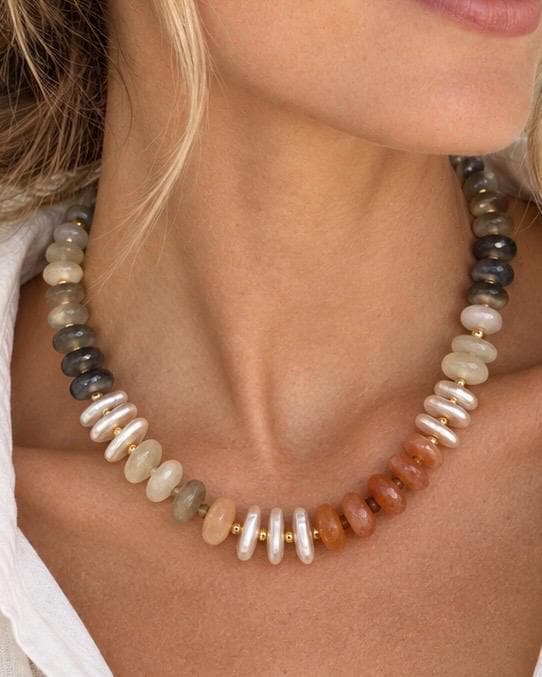
6 ways to tell real pearls from fake
- The tooth test. Rub a pearl lightly against the edge of your front teeth. The layered nacre of a real pearl feels gritty; glass and plastic feel smooth.
- The rub test. Rub two pearls together gently. Real pearls feel a little rough and may leave a fine powder that wipes away.
- Touch. Real pearls feel cool at first and warm slowly against the skin. Plastic feels room temperature right away.
- Weight. Real pearls feel heavier than they look. Plastic pearls feel light.
- Surface and shape. Under close light, real pearls show tiny ridges, spots or slight differences in shape and size from pearl to pearl. Perfect uniformity often means fake.
- The drill hole. Look closely at the hole. Real pearls have crisp edges. On fakes the coating often chips, flakes or peels around the hole.
Pearls with gemstones
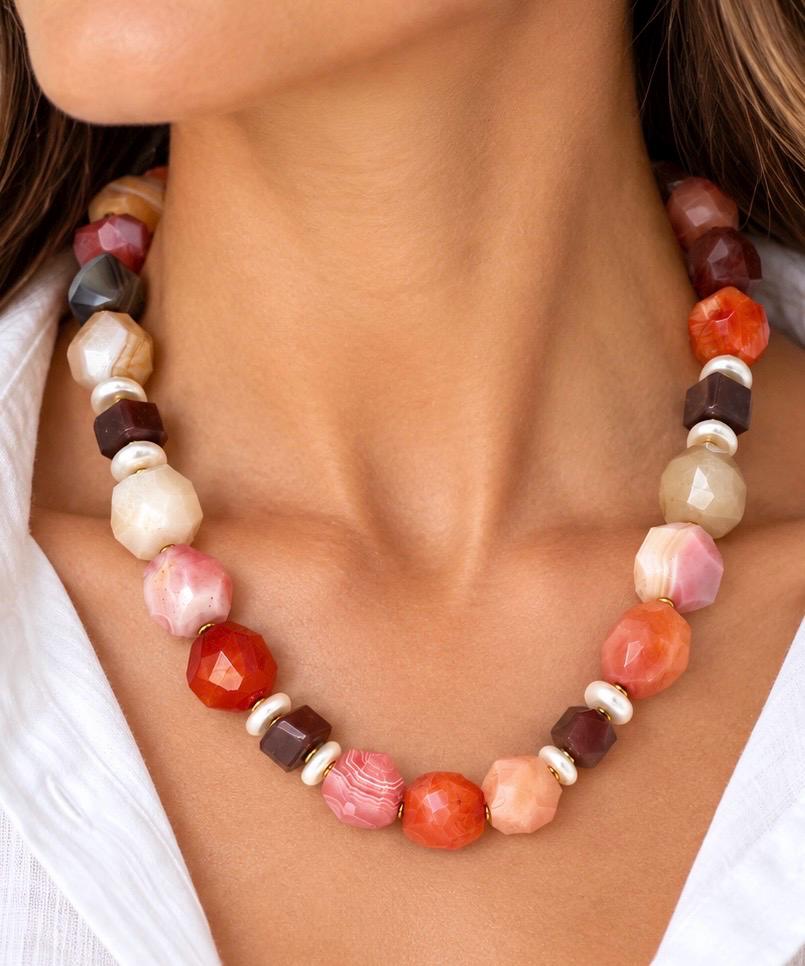
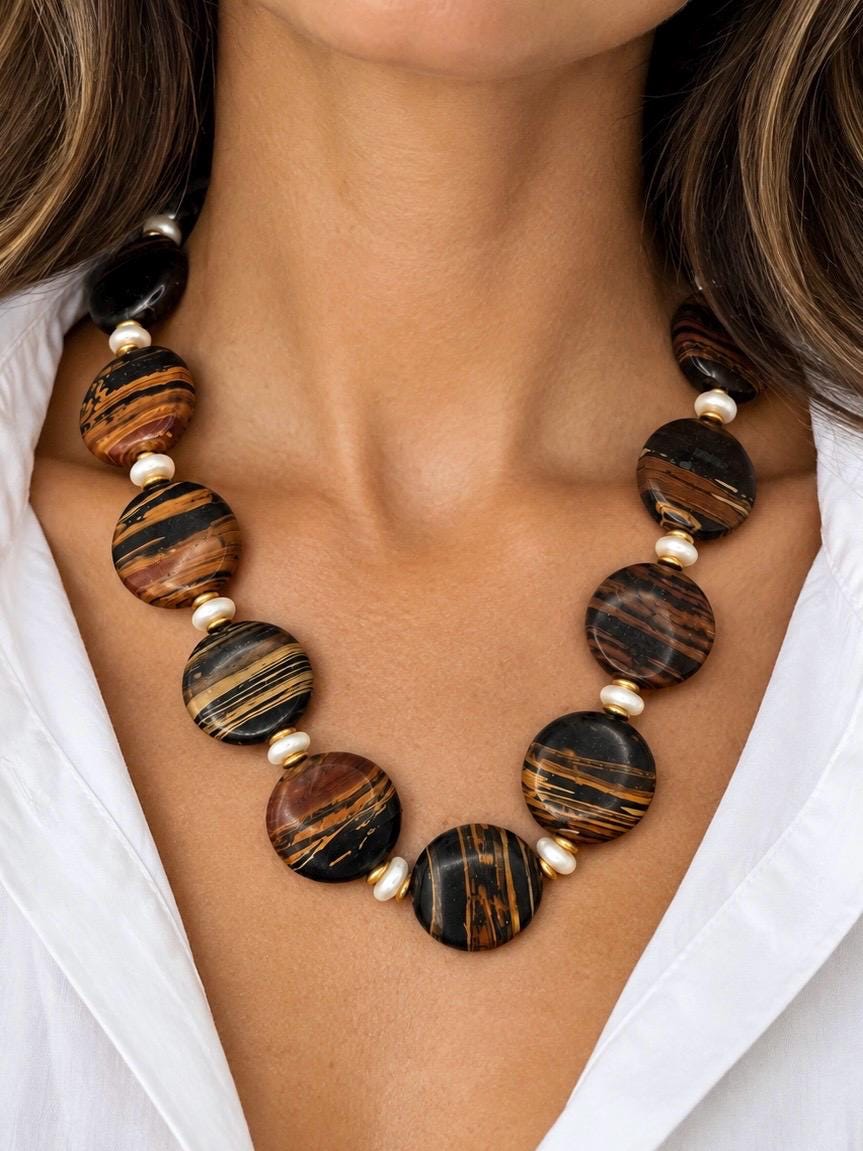
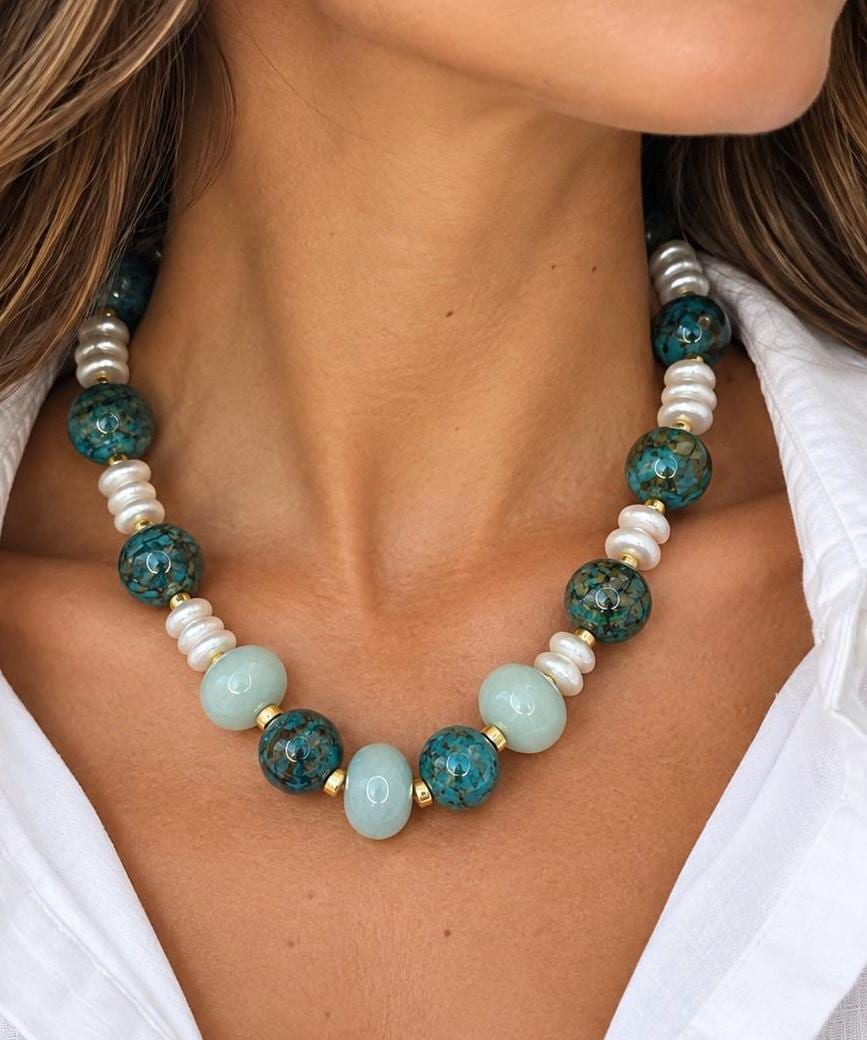
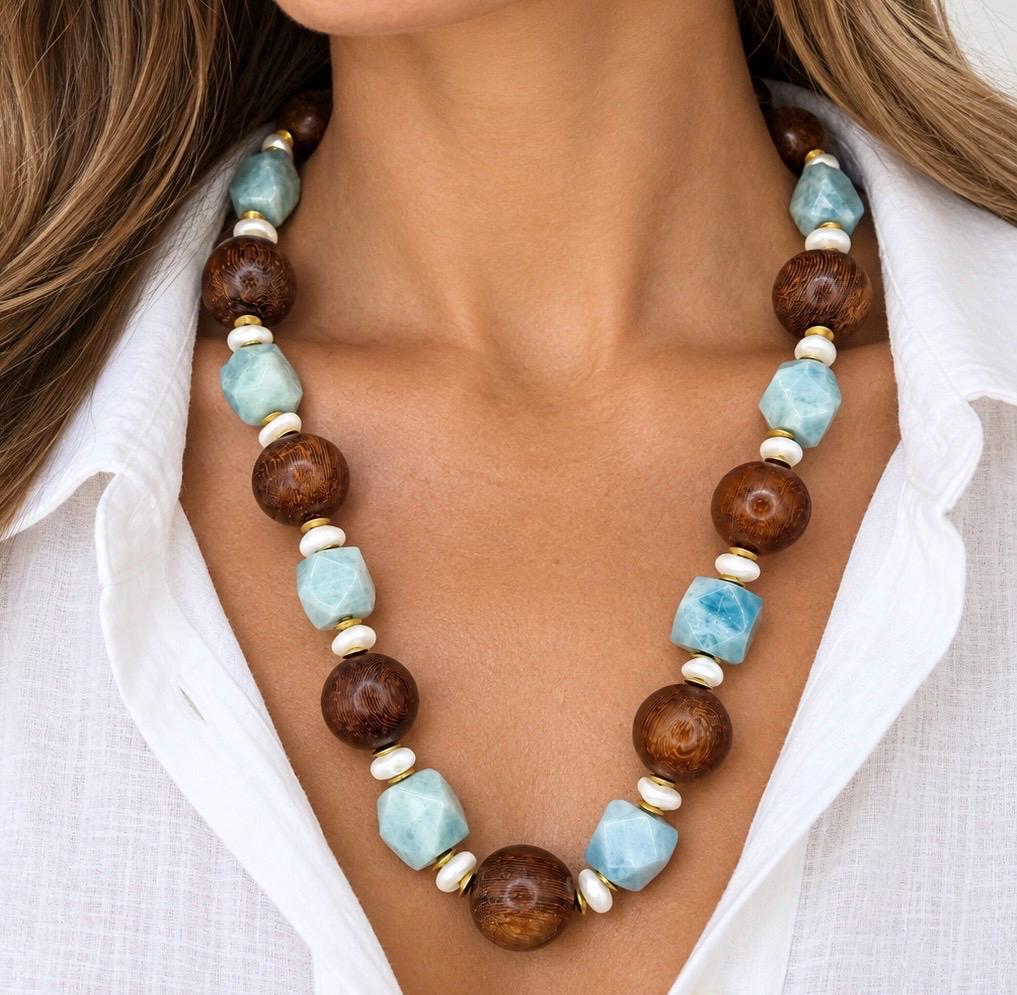
Are freshwater pearls real?
Yes. Freshwater pearls are real pearls grown in freshwater mussels. Nearly all pearls sold today, freshwater and saltwater, are cultured: a farmer starts the pearl, and the mollusk builds layer after layer of genuine nacre around it. Cultured pearls are real pearls. Imitation pearls are glass, shell or plastic beads with a pearly coating.
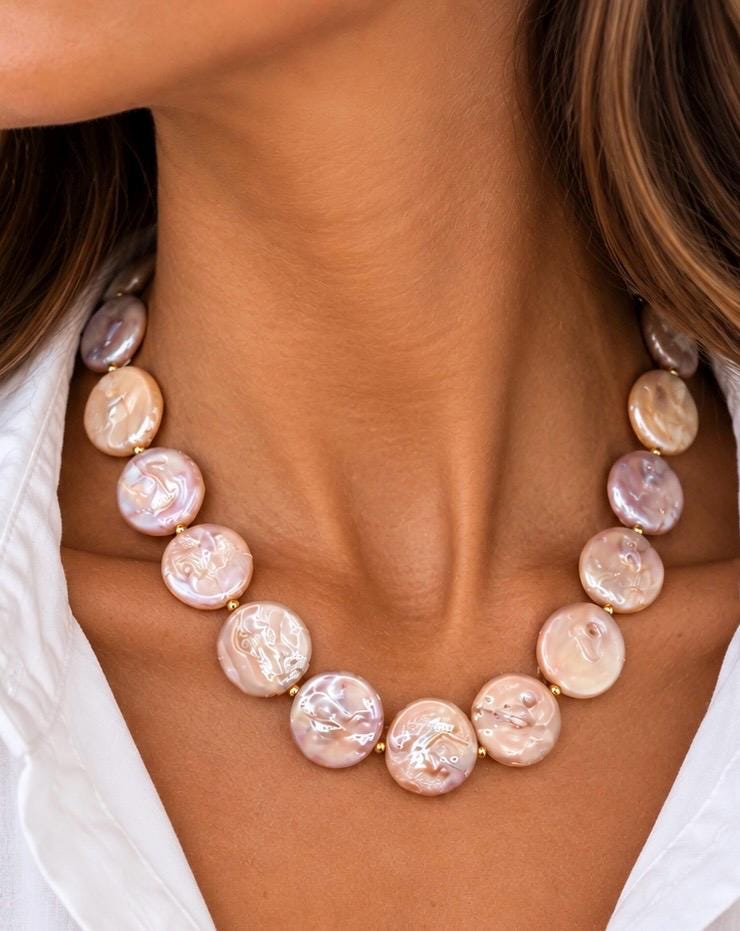
Freshwater pearls are often almost solid nacre, so they wear beautifully, and they come in organic shapes such as coin and baroque as well as soft natural colors from ivory to blush and lavender.
What makes a real pearl valuable
Value depends on type, size, luster (how sharply the surface reflects light), surface cleanliness, shape and how well the pearls match. Large, round, high-luster saltwater pearls cost the most, but a strand of lustrous freshwater pearls is real, durable and far more accessible.
How to care for pearls
- Put pearls on last, after perfume, lotion and hairspray.
- Wipe them with a soft cloth after wearing.
- Never soak pearls or use jewelry cleaners.
- Store them flat in a soft pouch, away from harder stones.
Questions
How can you tell if pearls are real?
The quickest way to tell if pearls are real is the tooth test: rub a pearl gently along the edge of your front teeth. Real pearls feel slightly gritty, like fine sand. Fake pearls made of glass or plastic feel perfectly smooth.
Are freshwater pearls real?
Yes. Freshwater pearls are real cultured pearls grown in freshwater mussels and made of genuine nacre.
Are cultured pearls real?
Yes. A cultured pearl is a real pearl; the mollusk builds the nacre, and a farmer only starts the process.
Do real pearls peel?
Real pearls do not peel. Coated imitation pearls often chip or peel, especially around the drill hole.
How much are real pearls worth?
It depends on type, size, luster, surface, shape and matching. Freshwater pearls are the most accessible real pearls; large round saltwater pearls cost the most.